
Welfare-led wedding planning
Dog Wedding Safety Checklist
A calm wedding appearance begins with a plan that can change whenever the dog needs it to.
Use this guide to assess suitability, venue risks, transport, weather, rest, guest interaction, equipment, emergency preparation and final handover.
Published 15 August 2026 · By Dog Wedding Kit
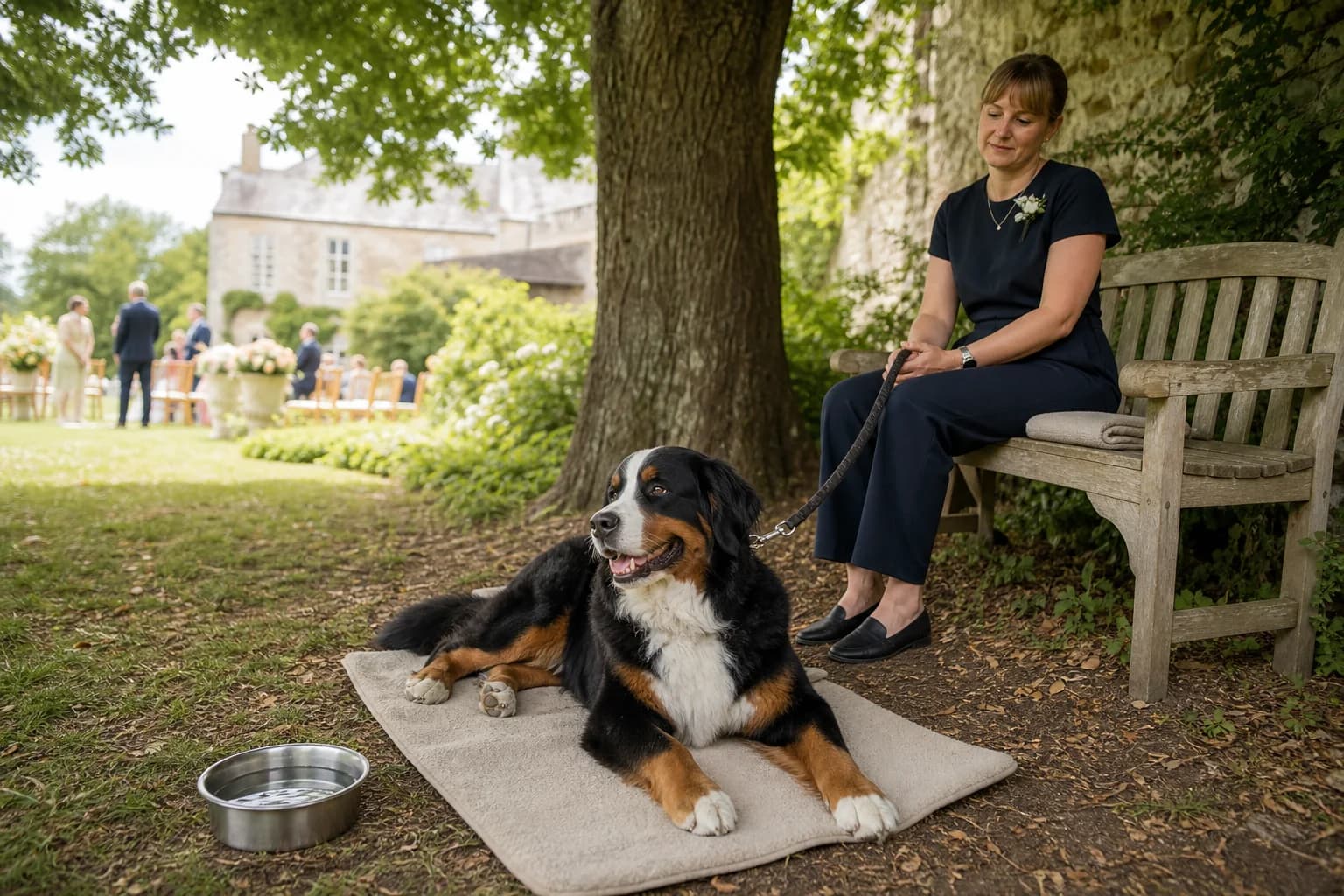
Dogs do not experience weddings as people do. A venue can mean unfamiliar travel, crowds, children, music, food, photography, handling, weather and a long interruption to normal routine.
The objective is not to make every dog stay for the whole event. It is to create a plan suited to the individual dog, with deliberate rest and a straightforward route to shorten or end participation. This guide supports planning and observation; it does not replace veterinary care, behaviour expertise or local legal advice.
01 · The individual
Start with the individual dog
Consider age, routine, previous experience, confidence, handling preferences, travel, crowds, noise, other dogs and children. Include health considerations disclosed by the owner or veterinarian where relevant to the plan.
Breed alone cannot predict whether a wedding is suitable. Observe the individual without diagnosing temperament, and stay within the provider’s handling competence. A familiar dog can also respond differently when the environment changes.
02 · Attendance decision
Decide whether wedding attendance is appropriate at all
Participation is not all or nothing. A dog might join one quiet portrait, arrive for the ceremony only, appear briefly before guests gather, or remain at home with trusted care. The useful question is which option gives the dog the best chance of remaining comfortable.
Non-attendance is not a failure. Welfare takes priority over photographs, ceremonial expectations and the desire to keep the dog present for longer. Agree this principle before the day so leaving early does not require a stressful debate.
Planning sequence
A wedding dog safety plan
- 01
Before accepting
Decide whether the proposed environment and role can suit this dog.
- 02
Meet the dog
Learn normal routines, cues, equipment and handling preferences.
- 03
Check the venue
Confirm access, boundaries, quiet space and relevant hazards.
- 04
Plan transport
Define restraint, route, parking, loading and return arrangements.
- 05
Prepare weather options
Agree workable indoor, shade, surface and departure alternatives.
- 06
Agree the ceremony role
Keep it brief, rehearsable and easy to abandon if needed.
- 07
Create the rest space
Provide calm supervision, water and a comfortable environment.
- 08
Confirm emergency contacts
Record the owner, authorised contact and veterinary options.
- 09
Plan departure and handover
Name the time, route, recipient and final care instructions.
03 · Familiarisation
Conduct a proper meet and greet
Ask the owner to demonstrate everyday handling, walking equipment, cues, feeding, toileting and settling routines. Discuss known triggers, transport experience and instructions for giving the dog space. Let the dog encounter the chaperone without event pressure.
This meeting informs a practical plan; it is not a clinical or behavioural diagnosis. Where concerns fall outside the provider’s competence, modify the role and refer the owner to an appropriate veterinarian or qualified behaviour professional.
04 · Health information
Gather health and veterinary information
Record the regular veterinary practice, an owner and backup emergency contact, known health conditions disclosed by the owner, allergies or feeding restrictions, and any relevant emergency authorisation framework. Identify a suitable emergency veterinary option near the venue before it is needed.
Medication instructions must be written and precise. A provider should administer medication only when the task is within their competence, insurance and local rules. The booking does not authorise diagnosis, dosage changes or treatment decisions.
05 · Venue assessment
Check the venue before the wedding
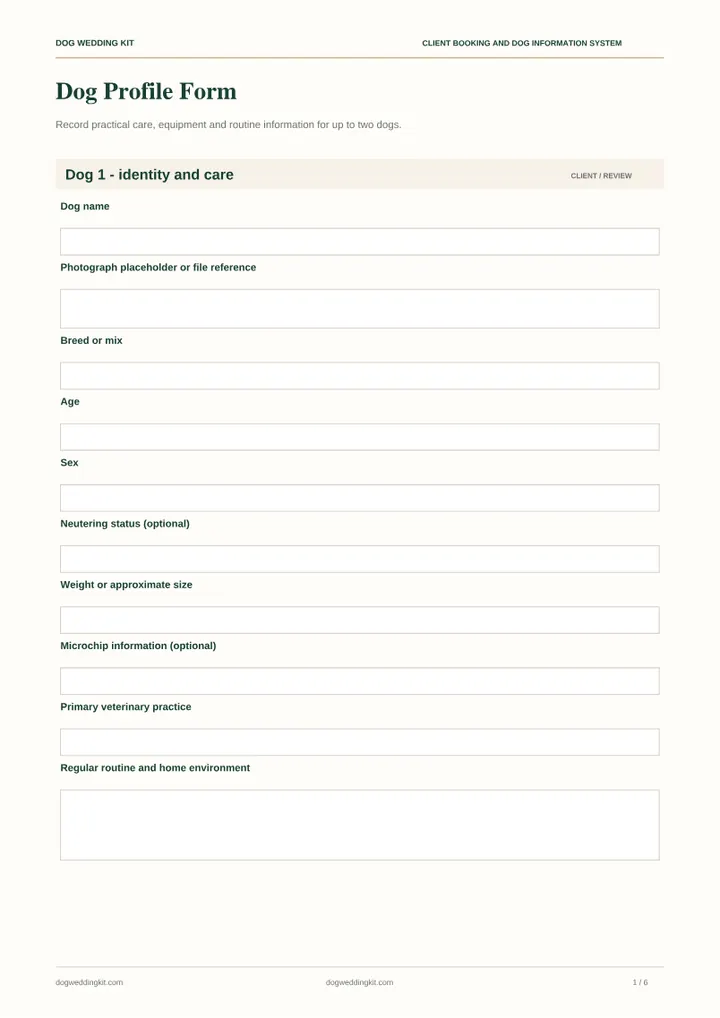
Confirm permission for the dog and map the real service route. Check parking, roads, gates, fencing, open water, stairs, balconies, crowded entrances, catering areas, toilets, photography locations and other animals where those features exist.
- Dog-permitted and restricted areas
- Safe parking and loading point
- Doors, gates and escape routes
- Roads, water, stairs and level changes
- Guest and catering traffic
- Quiet supervised rest location
- Reliable shade and indoor weather backup
- Suitable toileting area
- Photography surfaces and access
- Planned music, fireworks or other sudden noise
- Emergency vehicle access
Speak with the venue manager or planner about what may change after setup. A quiet corner on an empty-site visit may become a busy supplier route on the wedding day. The partnership guide explains how to structure venue visits and wedding-team coordination without duplicating this safety assessment.
06 · Transitions
Plan safe arrival and departure routes
Avoid the busiest guest entrance and the rush after the ceremony where possible. Confirm parking, loading and unloading, the walking route, surface conditions and the exact handover point.
Attach the dog’s lead to secure equipment before opening the vehicle or property exit. Keep responsibility continuous: one named person controls the dog through the transition rather than relying on several people to assume someone else has the lead.
07 · Vehicle journey
Plan transport safety
Use a suitable, familiar restraint or secured carrier, maintain a safe vehicle environment and plan the route, breaks, water and contingency time around the dog’s needs. Equipment should not interfere with driving or expose the dog to injury during sudden movement.
Never use a parked vehicle as a waiting room when temperature or ventilation could create risk. Transport law and commercial animal-movement requirements vary: verify the rules, vehicle insurance and permissions where the service operates. The insurance and business requirements guide provides the detailed transport disclosure checklist.
Jurisdiction example: the Great Britain Highway Code says animals in vehicles should be suitably restrained, while separate animal-welfare transport guidance may apply to economic activity. These are examples for Great Britain, not worldwide requirements.
08 · Forecast
Create a weather plan
Write a Plan A and Plan B for heat, cold, rain, wind, humidity, hot surfaces, lack of shade and outdoor ceremony exposure. The alternatives must be real: confirm the indoor space, shade structure or shortened schedule rather than assuming one will be available.
A weather plan should state who makes the decision and when. Check conditions again close to departure and throughout the booking, because the venue’s microclimate and surfaces can differ from a general forecast.
09 · Heat
Reduce heat and overheating risk
Outdoor waiting, warm vehicles, direct sun, hot paving, excitement and exertion can combine. Provide shade, fresh water, ventilation, low activity and a shorter participation window. Leave early when the safe alternative is no longer working.
Possible overheating is a veterinary concern, not something to watch casually until the schedule ends. Follow current veterinary first-aid guidance and contact a veterinarian promptly. Do not delay professional help in order to complete photographs or ceremony duties.
PDSA’s current heatstroke guidance covers warning signs, immediate first-aid steps and contacting a veterinarian. Use the source directly for medical guidance rather than relying on a wedding checklist.
10 · Cold and rain
Plan for cold and wet weather
Individual tolerance, coat condition, wind, rain, inactivity and length of exposure all matter. Prepare a warm, dry, ventilated rest space, towels and a dry return journey. Avoid long periods waiting on cold or wet surfaces.
Clothing is not universally appropriate. Use only familiar, well-fitting items suitable for that dog, and remove anything that restricts movement, causes irritation or traps moisture.
11 · Decompression
Create a genuine quiet space
A useful rest area sits away from speakers, guest traffic, food service and entrances. It has fresh water, comfortable footing, appropriate temperature and ventilation, active supervision and enough room for the dog to change position.
A familiar mat or item may help where practical. A locked, isolated store room, busy supplier corridor or parked vehicle is not an adequate substitute simply because guests cannot see it.
12 · Timeline design
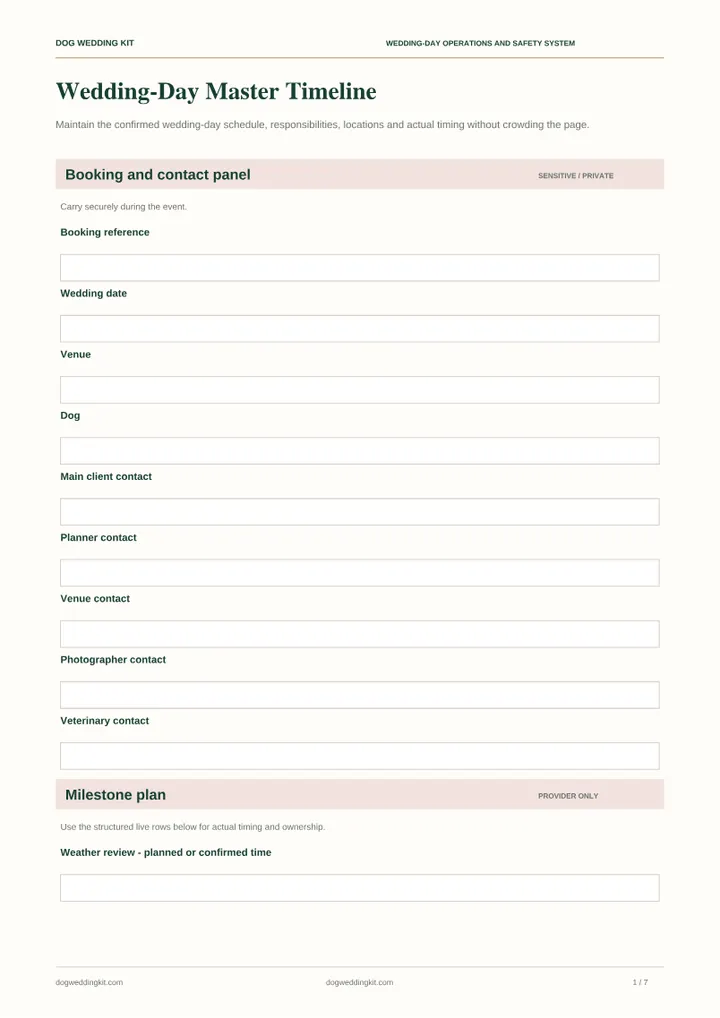
Build rest into the timeline
Plan rest before the dog is struggling. A booking might move through arrival, settling, brief participation, rest, a short portrait window, another rest and departure. The exact cycle should follow the dog and event rather than a universal timetable.
Protect the breaks from “just one more” guest or photograph. Rest only works when stimulation genuinely drops and the dog is allowed to disengage.
13 · Observation
Learn to notice body-language changes
Read the whole dog and the situation, not one isolated signal. Compare posture, face, movement and ability to settle with what is normal for that dog. Turning or moving away, lowered posture, tension or repeated inability to settle may indicate that more space or a different plan is needed.
Body language is not a diagnosis. Persistent or significant concerns belong with a veterinarian or appropriately qualified behaviour professional.
Observation guide
Green, amber, red: decide what the plan needs
Use the whole dog, their normal behaviour and the context. This is not a medical diagnostic chart.
Appears comfortable and settled
The dog’s overall posture and expression appear relaxed, and they can rest or engage and disengage normally.
Continue normal supervision and planned breaks.May need less stimulation
A meaningful change from normal or the whole body suggests discomfort, avoidance, tension or difficulty settling.
Create space, rest, shorten the role and reassess.Urgent welfare or medical concern
Collapse, being unresponsive, seizure, serious breathing difficulty, suspected poisoning or another urgent concern requires immediate action.
Leave the event environment and obtain veterinary help as required.The observation language follows RSPCA guidance to consider the dog’s complete body language and changes in behaviour. Urgent examples are drawn from PDSA emergency guidance.
14 · Guests
Manage guest interaction
Ask guests to wait for the handler’s invitation before touching or feeding the dog. Prevent crowding, hugging, repeated calling and a queue of greetings. Let the dog approach or move away where practical.
The dog is not entertainment. One calm interaction can be enough, and the handler should close the interaction before enthusiasm becomes pressure.
15 · Catering environment
Protect the dog around food and drink
Supervise continuously around dropped food, glasses, buffet tables, bins and catering routes. Ask guests not to feed the dog and use only owner-approved food or treats. Coordinate with catering staff when the dog’s route passes near service areas.
This guide is not a complete toxic-food reference. PDSA identifies hazards including chocolate, grapes and raisins, allium foods, xylitol, alcohol, caffeine and mouldy waste. Contact a veterinarian promptly if harmful ingestion is suspected rather than waiting for symptoms.
16 · Equipment
Manage leads, harnesses and wedding accessories
Use secure everyday equipment that fits correctly and is familiar to the dog. Inspect buckles, clips, stitching and identification details, and carry an appropriate backup. Decorative items should be secondary to the working collar, harness and lead.
Remove bows, florals or clothing if they interfere with movement, vision, breathing, temperature regulation or normal communication, or if the dog shows irritation. Never attach a lead to a decorative item not designed for restraint.
17 · Ceremony
Plan ceremony positioning
Walk the aisle route and choose the dog’s position, entry and exit. Consider speakers, food, dense seating, service routes and the distance to the quiet space. Name the person holding the lead and a backup person if handover is part of the ceremony.
Keep the role easy to shorten. The dog can leave before, during or immediately after the planned moment without being forced to remain for appearances.
18 · Portraits
Keep photography safe and brief
Choose a few priority groupings, check surfaces and nearby equipment, keep the handler close and use short sessions with breaks. Move the dog away while the photographer arranges people rather than holding a pose through every adjustment.
Remove a lead only where the space is genuinely secure, controlled and appropriate for that dog. Repeated positioning is not worth continuing when the dog is tired or trying to disengage.
19 · Children
Supervise children and dogs
An adult must actively supervise interactions. Prevent crowding, climbing, hugging, pulling, chasing and contact while the dog is eating, resting or trying to move away. Do not ask a child to manage the lead unless that arrangement has been assessed and directly controlled.
Teach respectful space without presenting every interaction as dangerous. RSPCA guidance recommends supervision, gentle interaction and giving dogs a place where children leave them alone.
20 · Multiple animals
Plan separately for other dogs and animals
Consider prior familiarity, individual handling, separate rest areas, feeding separation, lead management, transport and photography logistics. Do not assume dogs should greet or socialise because they are attending the same wedding.
Venue animals, wildlife or visiting pets may affect routes and rest areas. Separate handlers or timings can be more suitable than trying to manage every animal together.
21 · Secure movement
Make escape prevention routine
Check the lead-to-collar or harness connection before every vehicle, doorway, gate and handover transition. Monitor open entrances and ask the venue team not to prop doors or gates on the dog’s route without notice.
Use current identification and microchip contact information where applicable, carry a recent photograph, and agree a lost-dog response before the event. Calm redundancy is more useful than fear-based planning.
22 · Veterinary preparation
Create an emergency veterinary plan
Record the usual veterinary practice, a suitable local emergency veterinary option, phone numbers, addresses and likely route. Confirm the owner, authorised decision-maker and backup contact, including what happens if none can be reached.
Clarify transport, authorisation and payment responsibility in appropriate booking documents with local professional advice. The chaperone’s role is to recognise a concern, follow the agreed process and obtain professional help—not to diagnose or prescribe treatment.
23 · Early departure
What to do if the dog is no longer coping
Reduce stimulation, create distance and move to the planned rest area. Offer an appropriate opportunity to settle, contact the agreed person and remove optional activities from the schedule.
If the dog does not recover comfortably, depart. Welfare overrides the timeline. Medical concerns require veterinary advice; persistent behaviour concerns may need an appropriately qualified professional outside the wedding setting.
24 · Lost dog response
Create a lost-dog response plan
Pre-record the owner, venue lead and emergency contacts, a current photograph and accurate description. If the dog is missing, alert them promptly and ask the venue to help manage exit points where this can be done safely.
Follow appropriate local reporting routes and professional guidance. Avoid uncontrolled chasing or sending uncoordinated groups into roads or unfamiliar land. Keep one person responsible for information and updates.
25 · Records
Document incidents factually
Record what happened, the time and location, people present, observable condition or behaviour, actions taken, contacts notified and the final handover. Preserve relevant messages or instructions according to the business’s privacy and record policy.
Use plain observations rather than diagnosis, blame or speculation. Factual documentation supports an accurate owner update and later operational review.
26 · Transfer of care
Complete a safe handover after the wedding
Confirm the authorised recipient, location and time before departure. Transfer the dog with their secure equipment and any food, medication information, keys or property-access items. Give a concise update on care, comfort and relevant events.
Do not hand the dog informally to an unidentified guest. Record completion of handover and what happens if the named person is unavailable.
27 · Extended care
Plan overnight-care safety separately
Confirm the secure sleep environment, property access, feeding, walks, medication boundaries, overnight emergency information and next-day handover. Maintain the dog’s normal routine where practical.
Overnight care may involve different insurance, facilities and local licensing requirements. Verify them where the service operates and do not treat overnight responsibility as a casual extension of venue hours.
28 · Packing
Wedding-day dog packing checklist
Essential equipment
- Familiar collar or harness
- Secure lead and appropriate backup
- Waste bags
- Identification where applicable
Water and feeding
- Fresh water
- Clean stable bowl
- Measured food if due
- Owner-approved treats
Comfort and rest
- Familiar mat or bedding
- Comfort item where useful
- Towel
- Suitable cleaning supplies
Information
- Care and routine instructions
- Owner and backup contact
- Veterinary and emergency details
- Venue and supplier contacts
Weather
- Shade or indoor plan
- Drying or warmth items
- Surface and forecast check
- Vehicle climate plan
Wedding accessory
- Owner-approved item only
- Fit checked in advance
- Separate from restraint equipment
- Easy to remove
29 · Venue scan
Venue safety checklist
- Dog permission reconfirmed
- Arrival and departure route clear
- Parking and unloading point suitable
- Doors, gates and exits understood
- Roads, water, stairs and balconies assessed
- Quiet supervised rest space ready
- Shade, ventilation and indoor backup available
- Toileting route agreed
- Catering and bin areas avoided
- Ceremony and photography positions checked
- Other animals and guest dogs identified
- Emergency access and contacts available
30 · Final readiness
Chaperone final pre-departure check
- Dog’s current condition and routine confirmed
- Weather and traffic checked
- Vehicle and restraint ready
- Working and backup equipment packed
- Water, food and care items packed
- Venue contact and parking confirmed
- Timeline and supplier contacts available
- Owner, backup and veterinary contacts available
- Rest area and departure plan confirmed
- Authorised handover person reconfirmed
- Phone charged and records accessible
31 · Flexibility
Know when the plan should change
Reassess when weather changes, the dog appears uncomfortable, the venue becomes more crowded, the timeline runs late, photography expands, unexpected music or fireworks begin, transport is delayed or the dog becomes unwell.
A flexible plan has pre-agreed alternatives: reduce a role, move location, rest longer, skip photographs or leave. Flexibility is an operating standard, not an admission that planning failed.
32 · Common mistakes
Avoid common safety mistakes
- Prioritising photographs over comfort
- Arriving without a genuine quiet area
- Skipping the venue and route check
- Using vague transport arrangements
- Having no suitable backup lead
- Allowing guests to feed the dog
- Planning excessive wedding-day duration
- Working without emergency contacts
- Leaving departure decisions undefined
- Waiting too long to provide rest
- Using decorative equipment as restraint
- Finishing without confirmed handover
33 · Complete summary
Dog wedding safety checklist
Use this as a planning summary, then adapt it to the dog, venue, provider and local requirements.
Before booking
- Assess the individual dog and proposed environment
- Define the role, duration and non-attendance alternative
- Confirm provider competence and service boundaries
Before wedding day
- Complete meet and greet
- Collect routine, health and emergency information
- Confirm venue and supplier contacts
- Write a flexible timeline and departure plan
Venue
- Confirm dog permission and permitted areas
- Check roads, gates, exits, stairs and open water
- Identify quiet, shaded and indoor backup spaces
- Map arrival, toilet and photography routes
Transport
- Use suitable familiar restraint
- Check vehicle environment and route
- Attach the lead before opening at destination
- Never use a parked vehicle as an unsafe waiting area
Dog equipment
- Check familiar collar or harness fit
- Pack secure lead and appropriate backup
- Remove accessories that irritate or restrict
- Keep identification details current where applicable
Weather
- Check conditions and surfaces
- Prepare shade, water, dry or warm rest options
- Reduce activity and duration when needed
- Know when the outdoor plan is no longer suitable
Ceremony
- Confirm handler, position and exit route
- Avoid speakers, service routes and dense guest traffic
- Keep participation brief
- Permit immediate withdrawal
Photography
- Plan short essential groupings
- Check surfaces and equipment
- Keep the handler close
- Build in breaks and stop repeated positioning
Rest and welfare
- Prepare a genuine supervised quiet space
- Schedule breaks before signs escalate
- Offer water and toilet opportunities
- Observe the whole dog and changes from normal
Emergency
- Carry owner, authorised contact and veterinary details
- Know the local emergency veterinary option
- Agree transport and decision responsibilities
- Keep a factual incident and lost-dog response process
Handover
- Confirm the authorised recipient
- Transfer equipment, food and medication information
- Report the dog’s condition and relevant events
- Record time and completion of responsibility
34 · Professional systems
Use systems to make safety decisions visible
Structured dog profiles, behaviour and routine questions, emergency veterinary details, suitability and venue assessments, transport and weather plans, emergency and lost-dog responses, stress-signal references, incident records and handover checks give each decision a reliable place. The forms and paperwork guide explains which of these are client-facing and which remain internal.
Dog Wedding Kit includes representative resources across those areas. They organise information and accountability; they do not replace handling competence, veterinary or behaviour expertise, insurance, local compliance or professional judgement.
Inside the kit
Bring the wedding-day safety workflow together
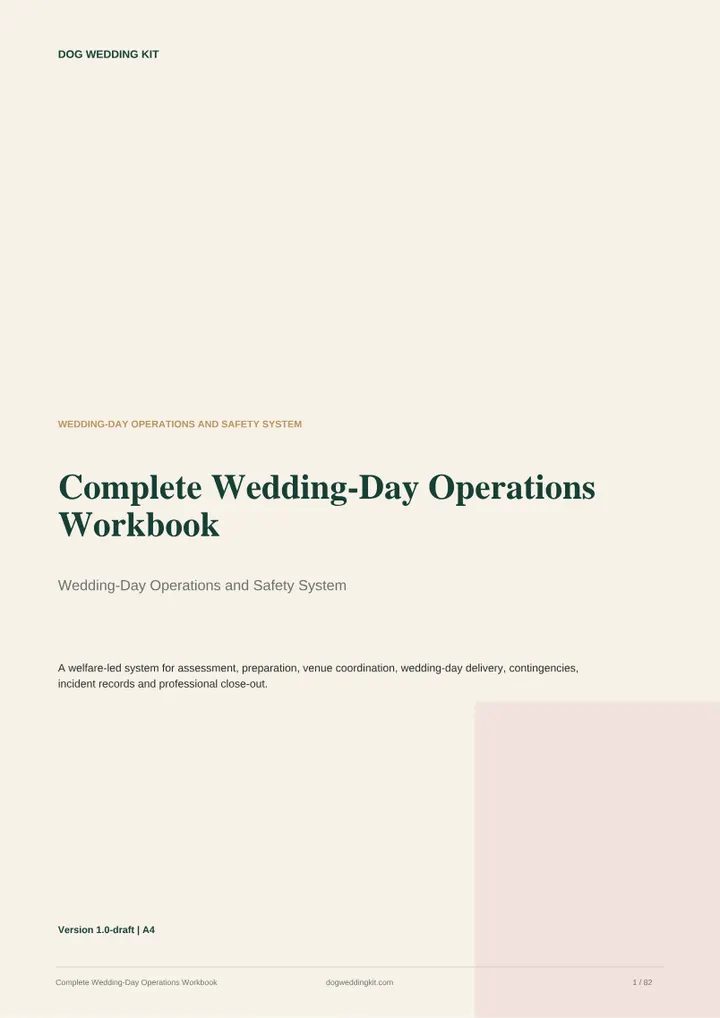
The Complete Wedding-Day Operations Workbook connects suitability, venue, transport, weather, emergency, incident and handover planning with the wider service timeline.
Explore Dog Wedding Kit safety resources →Questions about what is included? See the product FAQ or use the public contact form.
A successful appearance
The dog remains appropriately cared for, and the plan can change when needed.
Good preparation makes calm participation possible without treating the schedule as fixed. Assess the dog, control the environment, plan rest and departure, and obtain professional help whenever a concern is beyond the handler’s role.
Common questions
Dog wedding safety FAQ
Is a wedding too stressful for dogs?
It can be for some dogs and manageable for others. Assess the individual dog, the proposed environment and the length of participation. A brief appearance, quiet portrait session or staying home with trusted care may be the better plan.
How long should a dog stay at a wedding?
There is no universal safe duration. Travel, weather, noise, routine, rest space, the dog’s response and the planned activities all matter. Set a conservative plan with permission to leave earlier.
What if the dog appears stressed?
Reduce stimulation, create distance, move to the planned rest area and reassess the role. Shorten or end participation when needed. Persistent concerns may require veterinary or appropriately qualified behaviour support.
Should dogs stay for the reception?
Only when the individual dog, venue and care plan make that suitable. Receptions can add food, noise, movement and longer hours, so returning home after ceremony or portraits is often a useful option.
What should I bring for a dog at a wedding?
Bring familiar secure equipment, water and a clean bowl, owner-approved food or treats, waste bags, comfort and cleaning items, weather supplies, care instructions and emergency details. Add only what the dog and plan genuinely require.
How do you keep a dog cool at an outdoor wedding?
Plan shade and ventilation, fresh water, low exertion, cool resting surfaces and shorter participation. Avoid hot vehicles and surfaces. If overheating is suspected, follow current veterinary guidance and contact a veterinarian promptly.
What happens if a dog escapes?
Use the written response plan: notify the owner, venue and agreed contacts, manage exits where this can be done safely, share an accurate description and current photograph, and contact appropriate local services. Avoid creating further danger through uncontrolled pursuit.
Do chaperones need emergency veterinary details?
Yes. They should have the usual veterinary practice, a suitable local emergency option, owner and authorised-contact details, and clear instructions about decisions, transport and payment responsibility within the booking framework.
Welfare and safety sources
This guide uses planning principles from current welfare, veterinary and official transport guidance. Medical signs and first-aid steps should be checked directly with the source and a veterinarian.
- RSPCA: understanding dog body language
- RSPCA: children and dogs
- PDSA: heatstroke in dogs
- PDSA: poisons and common pet hazards and emergency pet information
- Great Britain Highway Code: animals in vehicles and commercial animal transport guidance
Last reviewed 15 August 2026. This article is general information, not veterinary, behavioural, legal, transport or insurance advice. Verify the requirements that apply where you operate.