
Venue and planner partnership guide
Working With Wedding Venues and Planners as a Dog Wedding Chaperone
How to introduce the service, prepare for venue conversations and coordinate the dog’s part of the wedding with professional clarity.
This guide covers outreach, venue visits, supplier boundaries, referrals, wedding-week confirmation and calm collaboration on the day.
Published 15 August 2026 · By Dog Wedding Kit
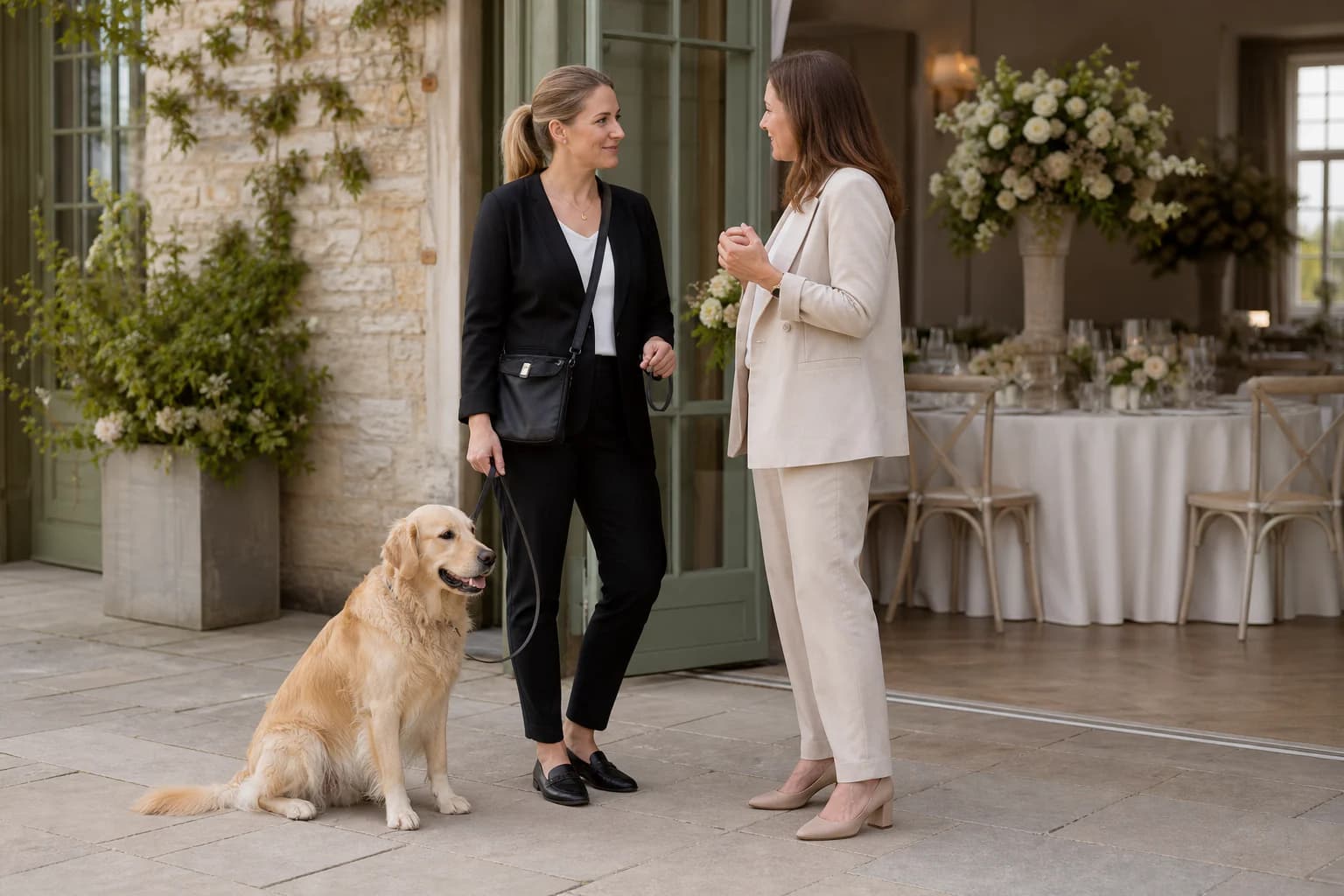
A dog wedding chaperone rarely works in isolation. The dog’s arrival, ceremony role, photographs, rest and departure intersect with the couple, venue, planner, photographer and sometimes several other suppliers.
Good coordination gives each person a clear contact and reduces last-minute assumptions. It also protects welfare: the venue team can identify restricted areas and escape points, the planner can place dog moments into the working timeline, and the chaperone can explain when the dog needs a break or an earlier departure.
This guide owns the professional partnership process. For the service itself, read what a dog wedding chaperone does. For detailed risk and welfare planning, use the dog wedding safety checklist. If you are building the wider business, begin with the startup guide.
Venue policies, planner responsibilities, supplier-list structures, insurance requests, referral rules and direct-marketing law vary. Confirm the requirements of the specific venue and the law, tax and professional rules where you operate.
01 · Partnership workflow
From introduction to wedding day
A professional relationship grows through useful contact and reliable delivery. A listing or referral is a possible later result, not the opening demand.
- 01IdentifyChoose a relevant venue or planner.
- 02IntroduceSend one personal, concise message.
- 03ExplainMake the service and its limits clear.
- 04VisitLearn the real routes, spaces and rules.
- 05ClarifyAgree dog logistics and contacts.
- 06CoordinateFit the dog plan into the timeline.
- 07ConfirmRecheck details during wedding week.
- 08CollaborateCommunicate calmly on the day.
- 09Follow upClose the loop without pressure.
- 10Build trustLet reliable work earn referrals.
02 · Roles and boundaries
Know who handles what before you approach partners
Venues matter because they control their spaces and operating rules. They may define access hours, parking, permitted dog areas, lead requirements, ceremony routes, catering restrictions and supplier documents. A venue that welcomes dogs may still restrict bedrooms, dining rooms, livestock areas or reception access.
A wedding planner or coordinator may build the wider timeline, liaise with suppliers and solve cross-wedding logistics. That does not make them the dog carer. A venue coordinator usually concentrates on the venue’s operation, but titles and responsibilities vary widely; ask what the individual actually covers.
Before making contact, be able to explain your service area, transport, supervision, ceremony and photography support, handover, maximum dog numbers, additional handlers and whether overnight care is offered. State exclusions and conditions just as plainly.
| Area | Dog chaperone | Planner / coordinator | Venue team | Photographer | Couple / client |
|---|---|---|---|---|---|
| Dog supervision | Usually leads | Not usually | Not usually | Not usually | Chooses provider |
| Dog welfare and breaks | Usually plans and monitors | May protect time | Identifies suitable spaces | Allows pauses | Provides dog information |
| Wedding timeline | Own dog-related timings | Usually leads wider timeline | Own venue timings | Own photo schedule | Approves decisions |
| Venue rules | Follows and clarifies | May coordinate | Sets and explains | Follows | Accepts in booking terms |
| Photography direction | Supports safe positioning | May coordinate timing | Confirms permitted areas | Usually leads images | Sets priorities |
| Emergency dog contacts | Holds and uses agreed plan | May need escalation contact | Provides venue contact | Normally outside role | Supplies authorisation and contacts |
These are typical boundaries only. Contracts, venue procedures and the couple’s supplier agreements determine the real allocation.
03 · Professional introductions
Make the first contact concise, relevant and easy to answer
Research the venue or planner before writing. Look at location, wedding style, supplier information and any published dog policy. Address a relevant person where that information is legitimately available, and explain why the service fits their work. Do not scrape lists or send an identical message to hundreds of contacts.
Include only what earns the next conversation
- Your name and the service you provide
- Who the service helps and the area you cover
- A plain explanation of dog care and wedding logistics
- Your welfare-led approach and service boundaries
- How you coordinate with venues, planners and photographers
- A useful website page and reliable contact details
- A light invitation to talk, not a demand for referrals
A website, one-page service summary, short brochure, selected real photographs and insurance information may be useful. Send documents when requested or clearly relevant; an unsolicited 30-page attachment creates work for the recipient.
Context: show that you know who you are writing to. Service: explain the dog-related problem you solve. Fit: state your area, welfare approach and coordination method. Next step: offer a short conversation or the relevant summary. Keep it specific enough that the recipient can reply with a simple yes, no or redirect.
Follow up without becoming noise
One considerate follow-up may help if the first message arrived during a busy week. Add something useful, keep it short and then give the recipient space. Record responses and honour any request not to contact them again. Direct-marketing and data-protection rules differ by place and business type, so check local requirements before outreach or wedding-fair lead capture.
04 · Venue visits
Turn a show-round into an operating plan
A venue visit is not a decorative tour. Follow the dog’s likely route from arrival to departure and notice where the environment will change after suppliers and guests arrive. Ask permission before bringing a dog to an initial visit.
Access and movement
- Supplier arrival time and correct entrance
- Parking, unloading and vehicle access
- Indoor and outdoor dog-permitted areas
- Ceremony entrance, position and exit route
- Photography locations and travel between them
- Gates, doors, livestock and other animals
Care and contingency
- Quiet rest area away from service routes
- Water source and agreed toileting place
- Food preparation, catering and waste restrictions
- Shade, shelter and severe-weather alternative
- Emergency vehicle access and nearest exit
- Handover and departure location
Questions to ask the venue
- Which spaces and wedding moments permit the couple’s dog?
- Are leads, carriers, crates or another control measure required?
- Are there restricted catering, accommodation or livestock areas?
- Who approves the plan and who is the contact on the day?
- What are supplier arrival, parking, access and departure procedures?
- Where can the dog rest and toilet without disrupting operations?
- What changes in wet, hot, cold or windy weather?
- Are other dogs, animals, fireworks or unusual noise expected?
- What business, insurance or risk information is requested?
- How should a changed or cancelled dog plan be communicated?
Information the venue may request
Depending on its process, a venue may ask for your service description, business and contact details, insurance evidence, dog information, arrival plan, risk or emergency planning, vehicle details or the couple’s written approval. Ask what is needed and by when; do not imply that every venue requires the same documents. The insurance and business requirements guide explains how to discuss venue evidence with an insurer.
05 · Referrals and supplier relationships
Understand the arrangement before describing it
Some venues publish supplier directories, some recommend providers informally, some maintain approved or preferred lists, and some do not recommend suppliers. A planner may keep a private shortlist based on fit and previous work. Inclusion does not guarantee enquiries, bookings, exclusivity or endorsement beyond the words actually agreed.
Ask how suppliers are assessed, whether insurance or references are required, whether the listing is paid, how long it lasts, whether performance is reviewed and what status wording you may use. Never place a venue logo on your website or claim “preferred supplier” status without explicit permission.
Discuss referrals transparently
Relationships can range from an occasional recommendation to mutual referrals, a public listing or a formal programme. If fees, commissions, gifts, discounts or reciprocal obligations are involved, clarify them in writing and consider disclosure, tax, consumer and local legal requirements. Do not prescribe a commission or hide a commercial relationship from clients.
Use wedding fairs selectively
- Choose events attended by your actual audience and useful partners
- Explain the service clearly in a few sentences
- Use real examples and professional materials without invented proof
- Keep the stand calm, accessible and uncluttered
- Collect contact details only with a clear lawful basis and permission where required
- Separate couple enquiries from supplier networking notes
- Follow up with the context promised at the event
- Measure useful conversations and bookings, not badge scans alone
06 · Before the wedding
Give the planner and venue the dog details they need
Once booked, identify who controls the wider timeline, who represents the venue and who can approve a dog-related change. Share only relevant information through agreed channels. The chaperone still owns dog care and should not expect the planner to hold the lead, supply water or solve an incomplete handover.
Coordination points
- Dog collection, transport and arrival window
- Venue entrance, parking and named contact
- Ceremony role, cue, position and exit
- Portrait timing, location and photographer contact
- Rest, water, toileting and feeding plan
- Guest interaction and food-hazard boundaries
- Weather alternative and early-departure trigger
- Return transport and final handover
- Backup dog and business contacts
- Who needs an update if the plan changes
Wedding-week confirmation
Reconfirm the current timeline, access time, dog-permitted areas, weather plan, ceremony and portrait cues, supplier contacts, equipment, dog routine, emergency details, departure and handover. Ask whether setup, construction, livestock, fireworks, other animals or access routes have changed since the visit.
07 · Wedding-day collaboration
Communicate enough, then let everyone do their work
Arrive through the agreed entrance, check in with the named contact and use one communication route where possible. Concise updates—arrived, settled, moving to ceremony, taking a welfare break, leaving—are more useful than a running commentary. Avoid interrupting the couple unless the plan says they are the decision contact or the situation genuinely requires it.
If the timeline changes, tell the relevant person what has changed, what the dog needs and what workable option remains. Welfare overrides unnecessary schedule pressure. A shorter portrait window or earlier departure is preferable to forcing a dog through discomfort.
Working with photographers
Confirm timing and permitted locations, keep the lead secure, support attention and safe positioning, and make handoffs explicit. The photographer directs the image; the chaperone judges handling and breaks. The deeper service responsibilities sit in the role guide.
Working with venue coordinators
Ask what they cover rather than relying on the title. They may manage venue access, staff, rooms, catering and house rules while an external planner manages the wider wedding. If there is no planner, agree directly who receives dog updates and who can approve changes affecting the venue.
08 · Restrictions and alternatives
Respect the venue’s answer—even when it is no
Restrictions may limit dogs to outdoor areas, the ceremony, certain photography spaces or defined hours. A venue may require a lead, prohibit reception or dining access, distinguish accommodation rules, or apply a separate policy to assistance or service animals under local law. Do not circumvent those rules.
If the venue says no, acknowledge the policy and ask once whether a limited permitted alternative exists. The couple might include the dog in preparations at home, take photographs off-site, choose a short approved appearance, arrange a private first look elsewhere or create a calmer separate celebration. The dog’s absence from the venue can still be the most responsible plan.
09 · Partnerships and welfare
Make dog welfare part of every professional conversation
Partnership is not only a marketing channel. A venue that identifies a quiet base, food hazards, open gates and weather shelter helps prevent avoidable problems. A planner who protects realistic travel, rest and portrait time makes the service easier to deliver. A photographer who accepts breaks gets a safer, more cooperative session. For the wider client-acquisition system around these relationships, use the marketing and getting clients guide.
Use the complete dog wedding safety checklist to plan suitability, venue hazards, transport, weather, stress, escape prevention, emergencies and handover. Do not claim that a partnership or venue approval makes every dog suitable.
10 · Long-term relationships
Earn trust through the ordinary professional details
- Arrive on time and use the agreed access route
- Present yourself and the dog’s equipment professionally
- Follow venue rules without needing repeated reminders
- Keep supplier messages concise and accurate
- Protect the dog’s rest without creating drama
- Leave spaces clean and complete a clear handover
- Thank the relevant people and close outstanding actions
- Update contacts when your service, area or insurance changes
Ask for genuine feedback after successful work and only when the timing is appropriate. Get permission before using a person’s name, venue name, logo, message or photographs. A testimonial should describe real experience, not provide borrowed authority.
Groomers, trainers, pet sitters, dog walkers and veterinary practices can also support appropriate preparation and referrals. Keep each relationship within the professional’s competence, obtain client permission before sharing dog information, and keep wedding venues and planners at the centre of this partnership strategy.
11 · Common mistakes
Avoid behaviours that make other professionals carry your service
- Sending generic bulk outreach
- Opening with a request for preferred status
- Describing an unclear or unlimited service
- Claiming a relationship that was never granted
- Ignoring venue rules or arriving without coordination
- Expecting planners or venue staff to handle the dog
- Overpromising dog behaviour, access or photographs
- Failing to clarify the insurance position
- Giving too many wedding-day updates—or none
- Pressuring a venue after it says no
- Using names, logos or images without permission
- Following up repeatedly after no response
12 · Actionable summary
Venue and planner partnership checklist
Before outreach
- Define the service and boundaries
- Choose relevant contacts
- Review published venue information
- Prepare a short introduction and useful link
First contact
- Personalise the message
- Explain the fit and welfare approach
- Offer a simple next step
- Record and respect the response
Venue visit
- Walk arrival-to-departure routes
- Confirm dog-permitted spaces
- Find rest, water and toileting options
- Record rules, contacts and contingencies
Before booking
- Check the couple’s plan matches venue policy
- Clarify requested documents
- Set communication boundaries
- Quote the real logistics
Wedding week
- Reconfirm timeline and contacts
- Review weather and venue changes
- Check emergency and handover details
- Share concise relevant information
Wedding day
- Use agreed access and contact
- Give concise milestone updates
- Coordinate ceremony and portraits
- Change the plan when welfare requires
After the wedding
- Complete handover and records
- Thank the relevant professionals
- Resolve promised follow-up
- Request feedback only when appropriate
13 · Partnership systems
Give every relationship and wedding a reliable place to live
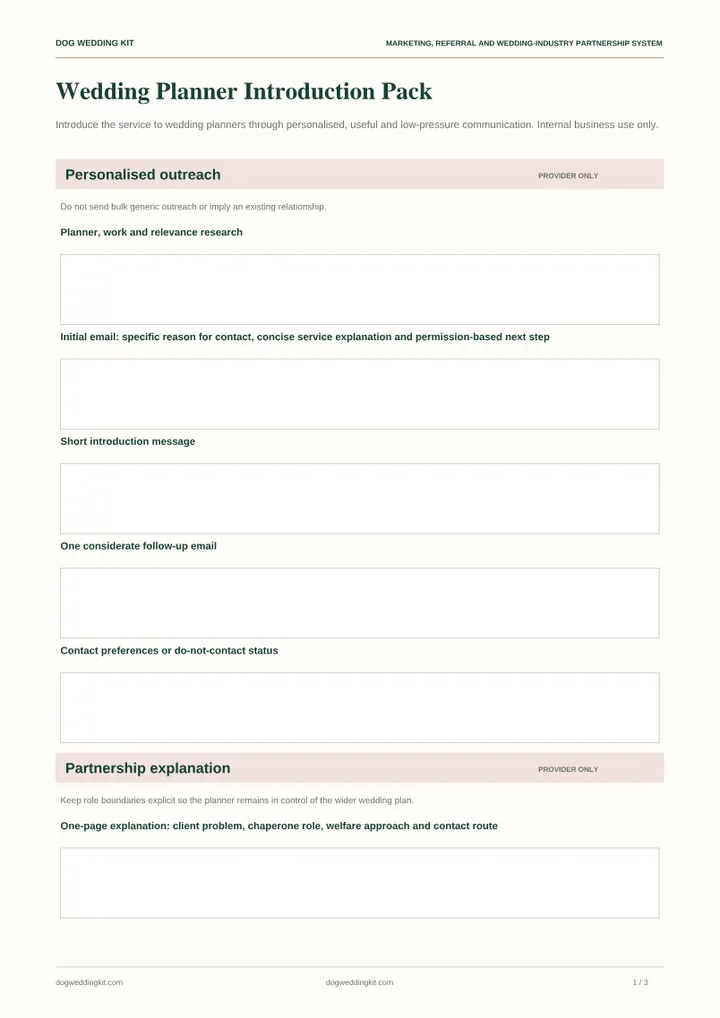
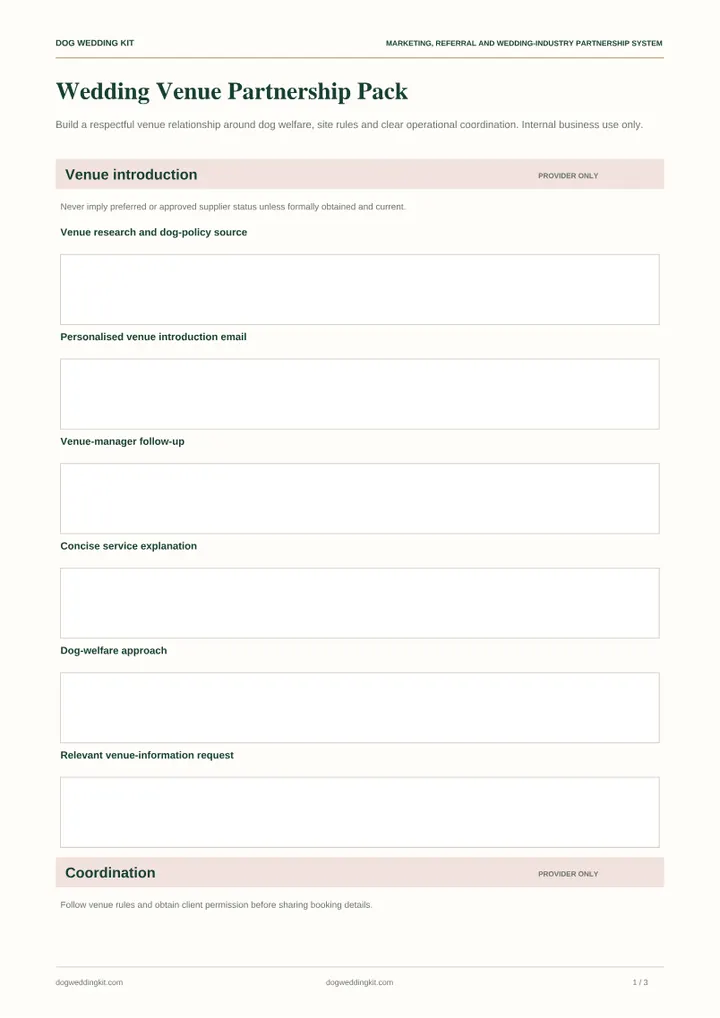
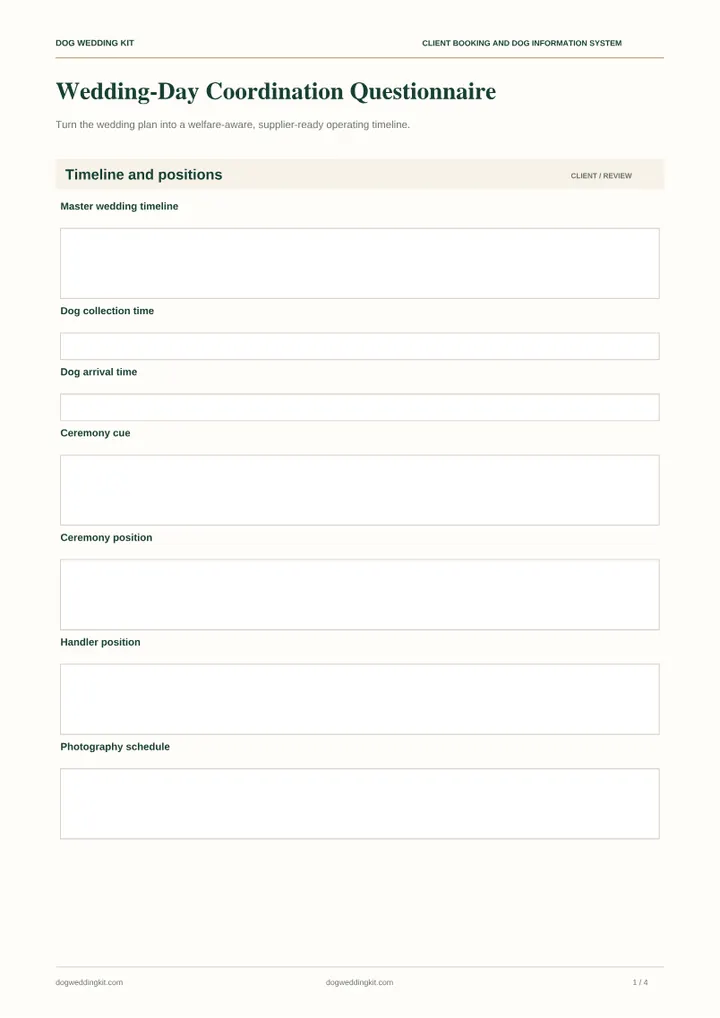
A Wedding Planner Introduction Pack and Wedding Venue Partnership Pack can help shape tailored outreach. A Wedding Supplier Contact Sheet, Wedding Venue Information Form and Wedding-Day Coordination Questionnaire keep event-specific details together. The forms and paperwork guide explains how those shared coordination documents fit into the wider client and internal record system. Referral planning and wedding-fair follow-up systems make it easier to track consent, promises and next actions without turning relationships into an indiscriminate mailing list.
The previews below are public samples from the existing Dog Wedding Kit product. They show the type of workflow support available; they are not proof of venue endorsement or a guarantee of referrals.
Partnership resources
Move from scattered messages to a repeatable professional workflow
Explore the planner, venue, photographer, referral, wedding-fair and coordination resources inside Dog Wedding Kit, alongside the client, safety and wedding-day systems they connect to.
14 · Research note
Why the advice stays flexible
Current provider pages consistently describe coordination with planners, venues and photographers, while venue policies show real differences in permitted spaces, leads, ceremony-only attendance, livestock, accommodation, insurance and supplier requirements. That variation is why this guide uses “usually”, “may” and “depends on agreement”.
- The Barns at Delbury Hall dog guidance illustrates advance notice, lead rules, accommodation limits and professional chaperone use.
- Grittleton House wedding guidance illustrates ceremony and reception limits alongside supplier insurance requirements.
- Timber Hall Events FAQs illustrate ceremony-only pet participation, access windows, parking, insurance and a preferred-vendor list.
- UK ICO business-to-business marketing guidance is one jurisdiction’s example of why outreach and opt-out rules must be checked locally.
15 · Frequently asked questions
Working with venues and planners: FAQs
How do I approach wedding venues as a dog chaperone?
Research each venue first, identify the appropriate contact and send a brief personal introduction. Explain the service, area covered, welfare approach and how you coordinate with venue staff. Ask whether the venue welcomes a short conversation; do not assume it wants an attachment, meeting or supplier pitch.
Should I contact wedding planners?
Yes, when their work and location are relevant to your service. A planner may value having a named professional responsible for dog care and dog-related logistics, but their role and supplier process vary. Make your introduction useful and specific rather than asking immediately for referrals.
What should I take to a venue visit?
Take a concise service summary, contact and business details, any insurance evidence requested, and a structured checklist. Record access, parking, dog-permitted areas, ceremony and photography routes, quiet space, toileting, water, gates, food areas, weather alternatives and the agreed contact route.
Can a venue recommend my business?
It may be able to recommend you informally, add you to a directory, or consider you for an approved or preferred list. Other venues do not recommend suppliers at all. A recommendation is the venue’s decision; never describe yourself as preferred or approved unless it has explicitly granted that status.
What does preferred supplier mean?
The meaning depends on the venue or planner. It may describe suppliers they know, a curated directory, providers who meet stated requirements, or a commercial listing. Ask what the label means, what standards or fees apply, whether inclusion is reviewed and what you may say publicly.
Should I pay venues for referrals?
Do not assume payment is expected or appropriate. If a fee, commission or reciprocal arrangement is proposed, understand it in writing and check disclosure, tax, consumer, anti-bribery and industry rules where you operate. Consider whether it serves clients fairly and obtain local professional advice when needed.
What if a venue does not allow dogs?
Accept the policy. Ask once whether a permitted alternative exists, such as outdoor portraits, a short approved ceremony appearance or an off-site location. If not, help the couple plan dog involvement elsewhere and do not pressure staff or try to bypass the rule.
How do I work with photographers and planners on wedding day?
Use the agreed contact route and timeline. Confirm the dog’s arrival, ceremony cue, portrait window, breaks and departure, then give concise updates when something changes. Support efficient positioning and handoffs, but do not take over photography direction or the wider wedding timeline. Dog welfare can require the plan to pause or shorten.
Professional partnerships, properly built
Clarity and reliability create the conditions for trust
Strong venue and planner relationships begin with a service that is easy to understand. Respect the other professional’s role, follow the venue’s rules, communicate what matters and keep dog welfare visible in every decision. Referrals may follow; the immediate goal is a wedding-day plan everyone can deliver.
Need to discuss a product or partnership question? Contact Dog Wedding Kit.