

Dog wedding chaperone business guide
How to Start a Dog Wedding Chaperone Business
A practical route for experienced pet-care people who want to turn careful dog handling into a clear, reliable wedding service.
This guide explains the business model, package and pricing decisions, client systems, venue coordination, wedding-day workflow and welfare safeguards involved.
Published 15 August 2026 · By Dog Wedding Kit
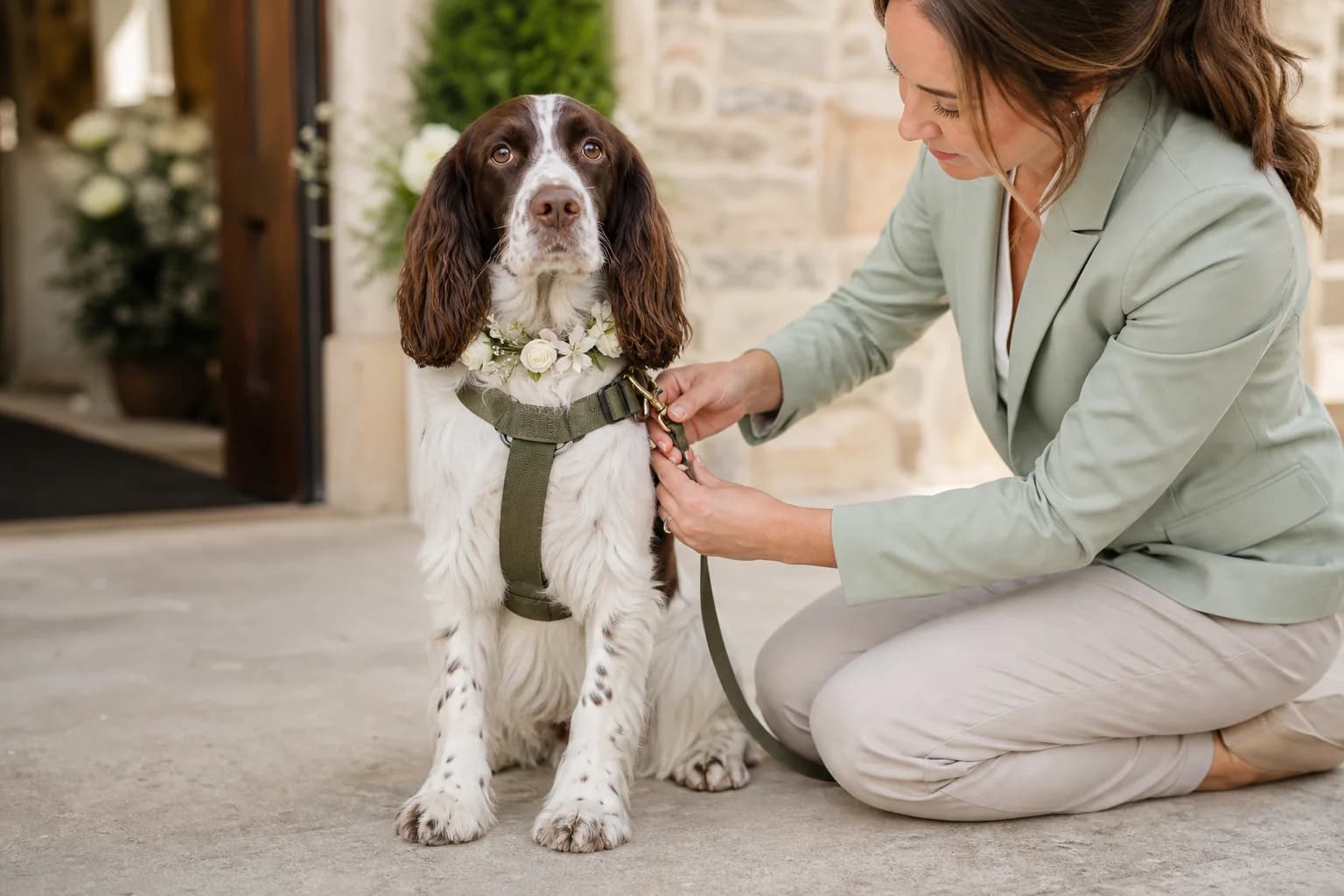
A dog wedding chaperone manages the dog-related care and logistics around a wedding so the couple, family and suppliers can concentrate on the day. The work may include transport, exercise, preparation, ceremony handling, photography support, comfort breaks and safe return care.
If you are still defining the role itself, begin with what a dog wedding chaperone does before, during and after the event. This guide concentrates on turning that service into a business.
Prefer a printable route through the setup? Use the free Dog Wedding Chaperone Startup Checklist to mark decisions and turn gaps into next actions.
It is specialist pet-care work, not simply bringing a dog to a venue. The provider has to combine calm handling with punctual logistics, clear client instructions, venue rules, supplier timing and the confidence to change the plan when the dog’s welfare requires it.
The planning principles below are general. Business registration, tax, insurance, licensing, contracts, animal-care rules, transport, privacy and consumer law vary by country and often by region. Verify requirements where you operate and use qualified local advice when needed.
Startup roadmap
Build the service in the right order
Each decision gives the next one firmer ground. Avoid designing a website or copying competitor prices before you know what you can responsibly deliver.
- 01
Assess your readiness
Start with handling ability, reliability and welfare judgement.
- 02
Define the service
Choose the moments, care and logistics you can deliver well.
- 03
Check local requirements
Verify business, animal-care, transport and insurance obligations.
- 04
Build packages
Turn a flexible service into choices couples can understand.
- 05
Set sustainable pricing
Account for preparation, travel, delivery, overhead and profit.
- 06
Create client systems
Build a consistent route from enquiry to final handover.
- 07
Plan operations
Coordinate the dog, venue, wedding team, timing and contingencies.
- 08
Build relationships
Become useful to planners, venues and trusted pet professionals.
- 09
Launch and improve
Begin within your limits, review each job and refine the system.
01 · Readiness
Decide whether the service fits your experience
Dog walkers, pet sitters, trainers, groomers and established pet-care businesses may already have useful foundations. What matters is not the job title but whether you can handle dogs calmly, read changing behaviour, follow detailed instructions and remain dependable when a wedding timeline moves.
Wedding venues can be noisy, crowded and unfamiliar. You may need to wait quietly, move quickly when cued, communicate with several suppliers and remove the dog without drama if the environment becomes too much. The work rewards preparation, punctuality and understated professionalism.
- Relevant hands-on experience with different dogs
- Ability to recognise discomfort and respond without diagnosing
- Calm handling around crowds, children, music and equipment
- Reliable transport and timekeeping
- Clear written and verbal communication
- Comfort following venue and supplier instructions
- Confidence saying no when a plan is unsuitable
Business resources can organise decisions and records. They do not replace practical dog-care skill, appropriate training, insurance or professional judgement. Read more about the limits and welfare-led philosophy behind Dog Wedding Kit.
02 · The work
Understand what a dog wedding chaperone can do
The scope can be narrow or extensive. Some providers collect a dog for portraits and a ceremony, then return them home. Others support getting-ready photographs, aisle participation, cocktail-hour greetings, reception transitions or overnight care.
| Stage | Possible responsibilities |
|---|---|
| Before arrival | Collection, safe transport, exercise, feeding, toileting, grooming preparation and checking equipment. |
| At the venue | Checking access, finding a quiet base, coordinating timings, supporting the aisle role and watching the dog’s comfort. |
| Photography | Helping position the dog, gaining attention without pressure, allowing breaks and leaving when the dog has done enough. |
| After participation | Water, rest, transport, return home, handover to an agreed person or separately arranged overnight care. |
You do not need to offer every option. A smaller service delivered consistently is stronger than a broad menu held together by improvisation.
03 · Local requirements
Research the rules that apply where you work
Separate general business planning from local compliance. The fact that another provider offers transport or overnight boarding does not mean you can automatically do the same under your local rules or current insurance. Use the insurance and business requirements guide to prepare the detailed activity and broker checks.
- Business registration and trading-name rules
- Tax registration, records and invoicing
- Public liability and animal care, custody or control cover
- Business use of a vehicle and animal-transport requirements
- Pet-care, day-care or boarding licences where relevant
- Employment or contractor obligations if another handler assists
- Written service terms, cancellations and consumer rights
- Client privacy, data storage and photography permissions
- Venue-specific insurance or supplier-document requests
Rules vary. For example, official guidance in England distinguishes activities such as home boarding and commercial transport. Treat such examples as a prompt to check your own national and local authorities, not as universal law.
04 · Service area
Define where you can work without weakening the service
A service area is an operating decision, not just a marketing radius. Consider the time from your base to collection, collection to venue, venue to the return location, parking, loading access and the chance of congestion or a late-running wedding.
Set a normal area and a clear approach to longer journeys. Decide how travel time, mileage, tolls, parking, accommodation and unusually early starts affect a quote. If an overnight stay is required for you or the dog, confirm what care, licensing and handover arrangements apply.
Describe the places you genuinely serve, then quote exceptional journeys individually. A wide map is not helpful if it makes punctual, welfare-led delivery unrealistic.
05 · Scope
Decide exactly what you will and will not offer
Write the service boundaries before writing the sales page. Decide whether you offer ceremony-only attendance, portraits, half-day or full-day support, rehearsals, extra visits, grooming coordination, additional dogs, second handlers or overnight care.
Then define exclusions: maximum dog numbers per handler, travel limits, environments you will not enter, tasks requiring another professional, and conditions under which you will shorten or change participation. Boundaries make quoting easier and protect the quality of delivery.
06 · Packages
Build packages around meaningful differences
Packages help couples understand what changes as coverage grows. The differences should be based on time, logistics, wedding moments and care—not decorative names alone.
| Concept | Could cover | Questions to resolve |
|---|---|---|
| Ceremony Essentials | Arrival, ceremony role, short comfort break and agreed handover. | Who transports the dog? Is rehearsal needed? |
| Ceremony + Portraits | Preparation, ceremony and a planned photography window. | Where can the dog rest? What happens if portraits run late? |
| Half-Day Chaperone | Collection, selected wedding moments, care and return transport. | Which hours and mileage are included? |
| Full Wedding Day | Longer preparation and participation with structured breaks and handover. | Is a second handler or off-site rest period needed? |
Overnight care, extra dogs, extra handlers, additional mileage and special visits can be separate additions if you are equipped and permitted to provide them.
07 · Pricing
Work out a price that covers the whole job
Do not price only the hours visible at the wedding. A three-hour venue appearance may require consultation, client messages, route planning, a meet and greet, document review, preparation, collection, travel, waiting, return care and follow-up.
Revenue
The money the client pays for the booking and agreed additions.
Costs
The direct and overhead expenses required to provide the service.
Profit
What remains after the costs of delivering and running the business are accounted for.
Build the quote from its real inputs
- Consultation and meet-and-greet time
- Client, dog and venue administration
- Travel time, mileage, parking and tolls
- Preparation, packing and equipment upkeep
- Wedding-day hours, waiting and schedule contingency
- Insurance, software, marketing and other overhead
- Additional dogs or a second handler
- Overnight or extended care where offered
- Applicable taxes and payment costs
- A sustainable profit for the business
Check the result against comparable local services, but do not copy a competitor’s number without knowing their scope, costs or business model. Review your actual time and expenses after early bookings, then refine. The dedicated pricing and packages guide explains the full calculation and package-design process.
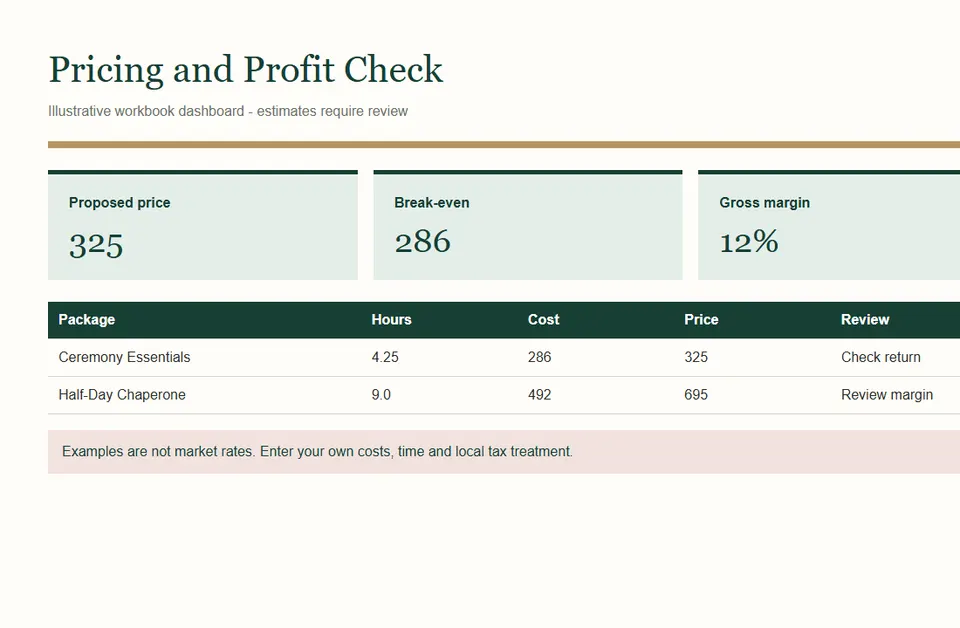
Optional shortcut
Model the numbers before publishing a package
The Dog Wedding Kit pricing calculator helps organise costs, break-even thinking, package assumptions, deposits and balances. It supports a decision; it does not choose the right market price for you.
See the pricing and package resources →08 · Client workflow
Create a consistent enquiry and booking route
A calm wedding day starts with orderly information gathering. Build a sequence that moves the client forward without asking for everything in one overwhelming form.
- 1Enquiry
- 2Discovery
- 3Consultation
- 4Dog information
- 5Suitability assessment
- 6Venue details
- 7Quote
- 8Agreement
- 9Payment schedule
- 10Meet and greet
- 11Final confirmation
- 12Wedding day
- 13Handover
- 14Follow-up
At each stage, decide what information you need, who confirms it and where it is recorded. This prevents important details from disappearing into messages spread across several channels.
09 · Suitability
Assess whether the plan suits the individual dog
Suitability is not a label attached to a breed. Consider the individual dog’s history, temperament, health information supplied by the owner, handling needs and response to the specific environment being proposed.
- Comfort in unfamiliar places and around unfamiliar people
- Response to crowds, children, music and sudden noise
- Travel experience and separation from the owner
- Behaviour around other dogs and venue animals
- Tolerance of grooming, clothing, harnesses and photography
- Weather, surface conditions and length of attendance
- Access to water, toileting, shade and uninterrupted rest
- The handler’s ability to move the dog away promptly
Do not diagnose behaviour. If the information suggests risk or the dog shows escalating discomfort, seek appropriate professional input, shorten participation, change the setting or decline the booking. Saying no can be the most responsible service decision.
The RSPCA’s dog body-language guidance is a useful general reference, but it does not replace knowing the dog or qualified behavioural advice.
10 · Venue
Plan the venue before the dog arrives
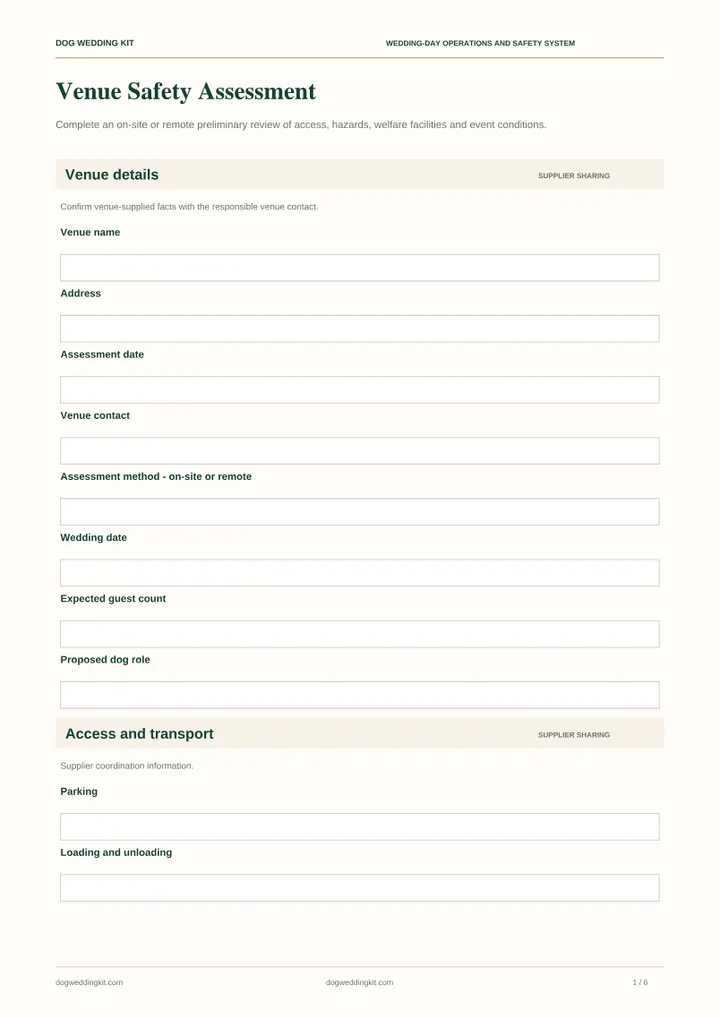
Confirm the venue’s dog policy directly. Identify where the dog may enter, wait, take part, rest and toilet. Ask about ceremony rules, indoor restrictions, food-service areas, livestock or resident animals, parking, loading access and any insurance documents required from suppliers.
- Named venue contact and wedding-day contact
- Approved dog-access areas and entry route
- Ceremony position and aisle plan
- Quiet water and rest location
- Photography locations and surface conditions
- Toileting route and waste arrangements
- Parking and safe loading point
- Emergency exits and nearest practical veterinary contact
- Wet-weather and extreme-temperature alternative
11 · Wedding team
Coordinate without taking over someone else’s role
The couple should know what you need from them and what you will handle. The planner or coordinator needs your timings and access requirements. The photographer and videographer need realistic windows for working with the dog. The venue needs confidence that you will follow its rules.
Groomers, pet sitters, trainers or behaviour professionals may also be involved. Confirm responsibilities and handovers in writing. Keep messages concise, use one current timeline and avoid presenting yourself as a preferred supplier unless that relationship genuinely exists.
12 · Operations
Build a wedding-day operating system
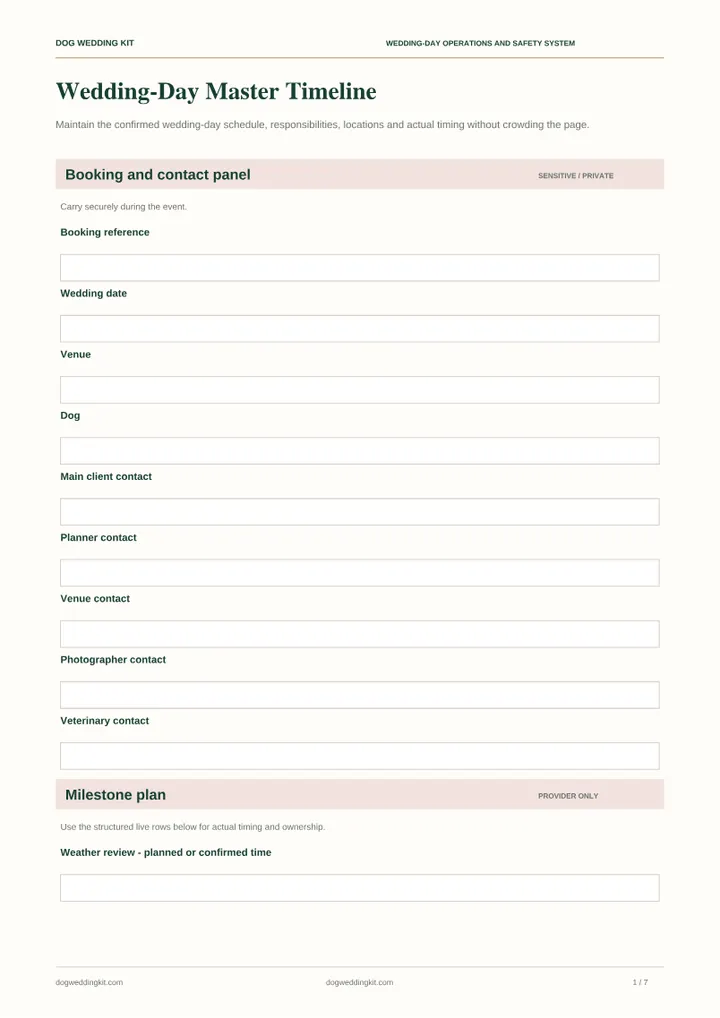
A wedding-day plan should tell you what happens, when it happens, where it happens, who is responsible and what changes if the original plan is no longer suitable.
Mini wedding-day checklist
- Confirm the latest master timeline and supplier contacts
- Recheck weather, routes, parking and venue access
- Pack client-approved equipment, food and treats
- Record collection and handover arrangements
- Allow time for exercise, toileting and settling
- Identify ceremony and photography cues
- Schedule water and quiet rest rather than waiting for stress
- Keep emergency veterinary and owner-authorised contact details available
- Complete the final handover and note any relevant incident
A master timeline gives the shared overview. A handler run sheet can then translate that overview into practical dog-care actions, including transport, preparation, ceremony positioning, photographs, rest and return.
13 · Safety
Prepare for changes without making the day feel alarming
Good contingency planning is quiet. Consider escape risk, equipment failure, traffic, weather, heat and cold, schedule delays, an overwhelmed dog, illness, a lost dog, a transport problem and a handover contact who cannot be reached.
Know the dog’s normal behaviour and watch for change. Provide water, shade, weather-appropriate rest and a reliable exit route. Never leave a dog unattended in a vehicle where temperature may become unsafe. Keep owner-provided veterinary details and permissions accessible, document incidents factually and contact a veterinary professional when needed.
Use the complete dog wedding safety checklist for the detailed venue, transport, weather, rest, escape, emergency and handover planning process.
For general welfare references, see the PDSA guide to heatstroke and local official animal-transport guidance. Emergency procedures should be adapted with appropriate veterinary and local professional input.
14 · Equipment
Prepare practical, wedding-safe equipment
Use familiar client-approved equipment wherever possible. Confirm fit and condition before the event, and keep presentation accessories separate from secure handling equipment.
- Secure everyday lead and suitable backup
- Well-fitted harness or collar
- Fresh water and portable bowl
- Waste bags and cleaning supplies
- Towels and a washable rest mat
- Owner-supplied food and approved treats
- Client instructions and emergency information
- Charged phone and power bank
- Brush, lint roller and simple grooming cloth
- Weather-appropriate shade or protective layer
Do not recommend or administer medication unless this falls within your competence, agreement, insurance and local rules, and you have clear owner and veterinary instructions where appropriate.
15 · Relationships
Become useful to wedding venues and planners
A professional introduction should explain the problem you solve, the areas you serve, how you protect dog welfare, how you coordinate and what information a venue or planner can expect from you. Keep it brief and specific.
Visit venues when invited, understand their rules, attend suitable wedding fairs and follow up with people who have shown genuine interest. Build trust through reliable behaviour rather than bulk email. Never imply preferred-supplier status, a partnership or an endorsement that does not exist.
16 · Website
Build a simple website and accurate local presence
Your website should make the service understandable before asking for an enquiry. Explain who it is for, what packages cover, the service area, your approach, relevant experience, common questions and how to contact you. Use real photographs and truthful information.
If eligible, a Google Business Profile can help a service-area business describe where it works. Follow Google’s current eligibility and address rules; do not create a virtual storefront or list an address where customers are not genuinely served. Relevant local wedding directories may also help when their audience and standards fit.
17 · Marketing
Market the service without looking desperate
Useful marketing demonstrates how the service works. Explain venue preparation, what couples should ask, how you plan rest and transport, or what makes a ceremony plan suitable for a dog. Behind-the-scenes material can build trust when it protects client privacy and accurately represents the work. Build the complete acquisition system with the dog wedding chaperone marketing guide.
Develop genuine supplier relationships, ask real clients for honest reviews, use styled shoots only when clearly described as styled, and choose a small number of channels you can maintain. Avoid fake scarcity, copied claims, invented testimonials and promises of stress-free perfection or guaranteed wedding outcomes. The dedicated guide to working with wedding venues and planners covers introductions, venue visits, referral discussions and professional follow-up.
18 · Common mistakes
Avoid the shortcuts that create expensive problems
- Pricing only the visible wedding-day hours
- Accepting every dog or every requested environment
- Leaving service boundaries open to interpretation
- Failing to confirm venue rules and supplier timings
- Forgetting travel, parking, administration and schedule overrun
- Collecting too little client or dog information
- Operating without a clear emergency and handover process
- Offering overnight care without checking separate requirements
- Trying to launch every package and add-on at once
- Depending on one social platform for all enquiries
- Copying competitor prices without understanding their scope
- Promising behaviour, weather, photographs or results you cannot control
19 · First month
Use a realistic 30-day startup roadmap
Readiness and research
Assess your experience, research local requirements, speak to insurers, map the service area and review likely venue conditions.
Services and pricing
Define boundaries, draft a small package menu, calculate full delivery time and costs, and test whether the numbers are sustainable.
Client and wedding systems
Build the enquiry route, dog information process, suitability review, venue checklist, timeline, run sheet and handover method.
Launch preparation
Create the essential website pages, prepare honest photographs, introduce the service selectively and rehearse the operating workflow.
The aim is readiness for a careful launch—not completing every future marketing idea in four weeks. If compliance, insurance or operating systems need longer, take longer.
20 · Documents
Know which documents support the service
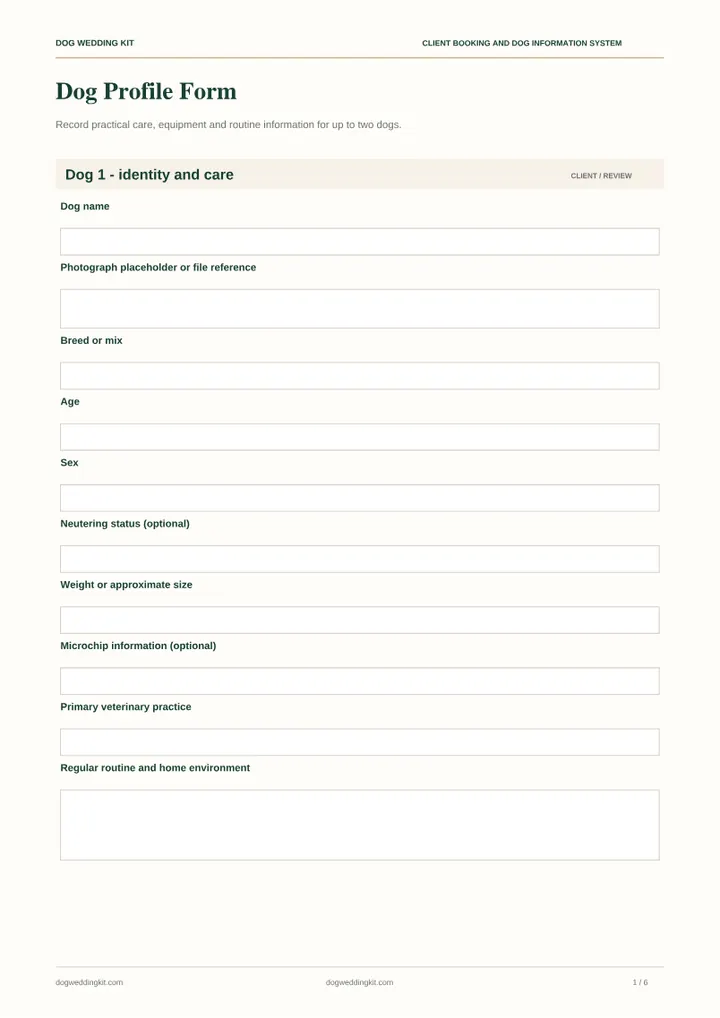
You do not need paperwork for its own sake. You need a proportionate record of the decisions, permissions and details that matter. The dedicated forms and paperwork guide explains what clients complete, what stays internal and what belongs in the wedding-day pack.
Business planning
Readiness review, launch plan and service scope.
Pricing
Cost review, package builder, quote and payment schedule.
Enquiry and client
Discovery questions, consultation notes and booking summary.
Dog information
Profile, routine, health, veterinary and behaviour information.
Venue and suppliers
Venue details, contacts, access and photography coordination.
Authorisations
Transport, property access, photography and other relevant permissions.
Wedding operations
Master timeline, run sheet, packing, ceremony and handover.
Safety
Suitability, weather, venue, transport, emergency and incident records.
Marketing and partnerships
Service-page copy, enquiry responses and tailored introductions.
21 · Build or buy
Decide whether a ready-made business kit is useful
You can build your own system. That may suit someone who already has strong pet-care policies, commercial documents and wedding workflows, or who prefers developing each resource from the ground up.
A ready-made kit can be useful when you want a connected starting structure rather than a blank page. You still need to adapt every resource to your business, local requirements, competence and way of working.
The ready-made route
Dog Wedding Kit brings the business and wedding-day system together
Explore the actual pricing, client, dog-information, venue, operations, safety, marketing and partnership resources, then compare the available bundles.
22 · Final check
Dog wedding chaperone business startup checklist
- I have relevant dog-handling experience and clear limits
- I have checked local business, pet-care, transport and tax requirements
- My insurance reflects the activities I plan to offer
- My service area and travel policy are workable
- My packages define inclusions, exclusions and handovers
- My pricing accounts for all time, costs, overhead and profit
- My enquiry and booking workflow gathers information in stages
- I assess the individual dog and the proposed environment
- I confirm venue access, rules, contacts and quiet rest areas
- I use a current timeline, run sheet and packing checklist
- I have weather, escape, emergency and incident processes
- My equipment is secure, familiar and appropriate
- My website and marketing make only truthful claims
- I know when to modify a plan, seek advice or decline a booking
A careful start
Build the service before you market the moment
A dog wedding chaperone service can give couples a practical way to include their dog without asking relatives or wedding suppliers to manage the care. The strongest businesses make that joyful result possible through clear boundaries, sustainable pricing, thoughtful client systems and welfare-led decisions.
Begin with what you can deliver well. Verify local obligations, practise the workflow and let experience shape the service you add next.
Practical questions
Starting a dog wedding chaperone business: FAQs
Can a dog walker or pet sitter become a wedding dog chaperone?
Yes, existing pet-care work can provide a useful foundation, but wedding work adds strict timing, unfamiliar venues, supplier coordination and public-facing responsibility. Assess whether your handling experience and operating systems are ready for that extra complexity.
Do I need a specific qualification?
There is no single worldwide qualification for this service. Requirements vary by location and by the activities you offer. Check local rules, insurance conditions and any licences or training relevant to pet care, transport, boarding or employees.
How much should I charge?
There is no responsible universal rate. Work from your full delivery time, travel, preparation, administration, overhead, taxes, contingency and desired profit, then test the result against your market and service quality.
What should a package include?
A clear package normally defines the included consultation, collection or arrival arrangements, on-site duration, wedding moments, dog care, transport or handover, travel allowance and available additions. State exclusions just as clearly.
Do I need insurance?
You should identify the cover required by law and the cover appropriate to your actual activities. Discuss animal care, custody, transport, public liability, employees, equipment and any boarding with a qualified local insurance adviser.
Can I offer overnight care?
Only if you have the experience, facilities, insurance and local permissions required. Overnight care changes the duration and risk of the service and may bring separate boarding requirements, so treat it as a distinct operational decision.
For questions about the ready-made resources, read the Dog Wedding Kit FAQs or send a product enquiry.
Research notes
This guide was informed by current service structures published by established wedding pet-care providers in several markets, alongside animal-welfare, business and search guidance. Provider examples were used to understand common service patterns; their wording and pricing were not reproduced.
- Representative provider models: PawCasion and PETigo.
- Dog welfare: RSPCA body-language guidance, PDSA heatstroke guidance and AKC wedding participation considerations.
- Examples of location-specific checks: UK animal-activity licensing, animal transport guidance and business insurance guidance.
- Search and local-presence implementation: Google’s people-first content guidance and service-area Business Profile guidance.